


The Muscle-Mind Connection: Stronger Muscles, Sharper Mind
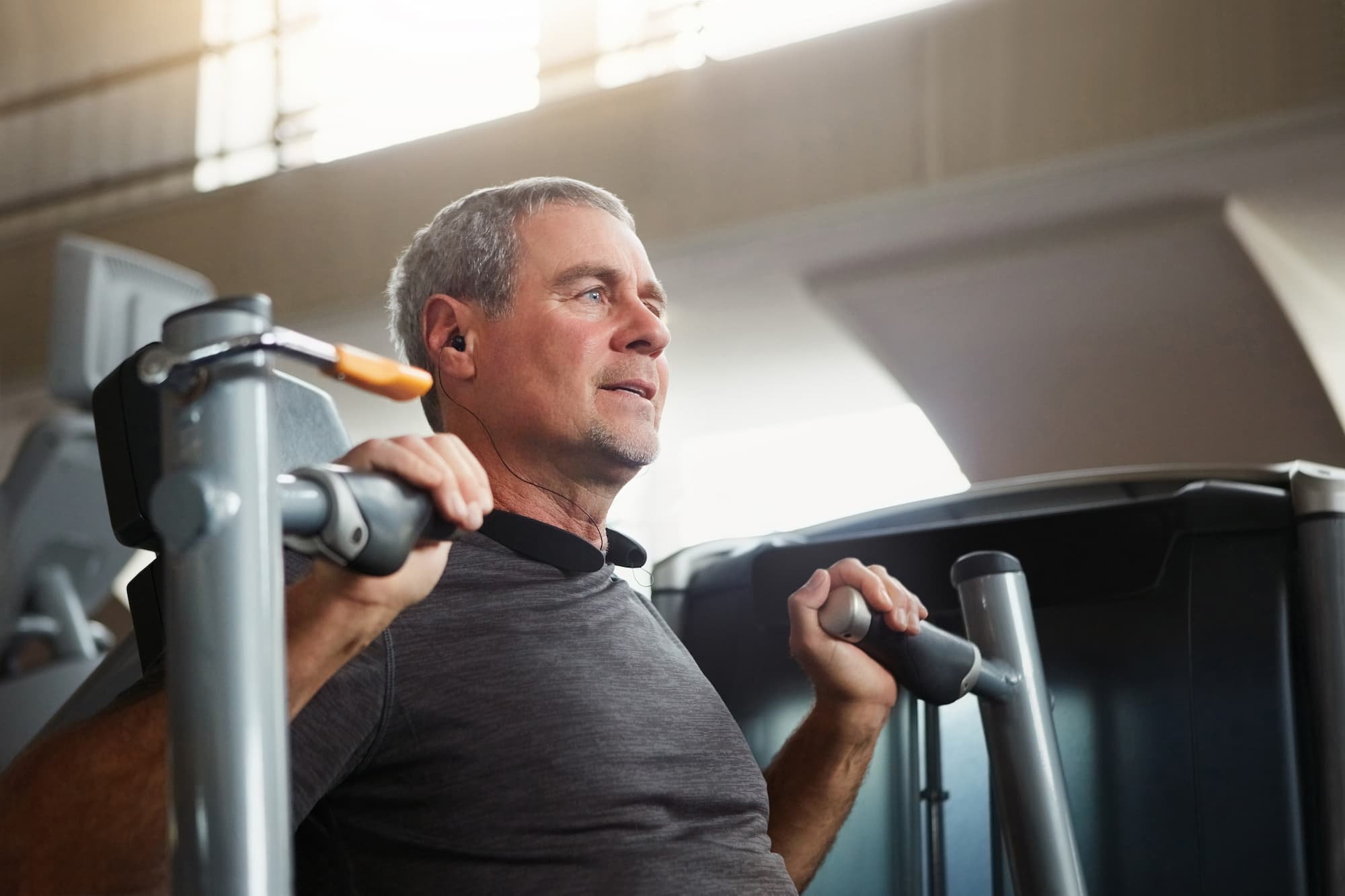
The sun is out and the morning air is already warm over Austin. Ann is midway through a resistance class in the Forty Acres Room using weights and TheraBands®. Mark is 2 miles down the Ann and Roy Butler Hike-and-Bike Trail at Lady Bird Lake, riding his bike and taking in Hill Country views. Neither one is thinking about their brain, but both are doing something for it anyway.
Healthy aging places a lot of focus on memory: crossword puzzles, brain games and lifelong learning. While cognitive health is important, there’s an equally powerful, less visible process unfolding in the muscles at the same time. An increasing body of research suggests our muscles and brain are connected in ways scientists are only beginning to map.
For Ann, Mark, and other Longhorn residents, they feel it in the extra rep during a strength class or an extra mile on the Southern Walnut Creek Trail. They also feel it in the choice each day to grab life by the horns, proving that staying strong and staying in motion is its own kind of Texas pride.
What Your Grip Says About Your Brain
A study followed nearly 200,000 adults in the U.K., tracking their handgrip strength over time alongside dementia risk, memory test scores and brain scans. Results showed an association between grip strength and neurocognitive brain health. Those with weaker grip strength were more likely to develop dementia. Their brain scans showed differences, too, including a smaller hippocampus, the part of the brain most closely tied to memory.
Another study followed more than 340,000 people for nearly a decade. The pattern held up again: every small increase in grip strength lined up with a meaningfully lower risk of dementia, roughly 14 percent lower for every 5 kilograms of extra strength.
Muscle to Mind: How It Works
Researchers don’t have a full explanation of why muscle and memory might be linked, but a few theories are gaining ground. Muscles release signaling proteins called myokines during activity. Some appear to cross the blood-brain barrier and directly support neuronal health. Strength also correlates closely with cardiovascular fitness and blood flow, both of which are essential for a well-supplied brain. And people with greater strength and mobility generally remain more socially active and independently mobile, two factors known to support cognitive health.
What Age-Related Muscle Loss Looks Like
Sarcopenia, the clinical term for age-related loss of muscle mass, strength and physical function, can begin as early as your mid-30s. According to Harvard Health, muscle mass declines at roughly 1 to 2 percent per year through midlife, a rate that accelerates to about 3 percent per year after 60. Adults who never strength train can lose 4 to 6 pounds of muscle per decade.
So, when do you start losing muscle in a way you’d notice day to day? Senior muscle loss is a slow accumulation rather than a single turning point. It usually happens well into your 60s and 70s, when small annual declines compound into changes you can feel: Steeper stairs, tighter jars and less certain footing on uneven ground.
Can You Regain Muscle Mass? The Research Says Yes
The encouraging message is that age-related loss of muscle mass isn’t a one-way street. Study after study shows that resistance training, even when started later in life, produces strength gains.
Learning how to build muscle after 70 or how to regain muscle mass after 60 comes down to a short list of habits to repeat often:
• Strength train two to three times a week. Bands, light weights or bodyweight exercises all count.
• Eat enough protein. Muscle repair depends on it, and the body’s protein needs often rise with age.
• Move throughout the day. Walking and biking support the same muscles that keep you steady on your feet.
• Keep up with balance and flexibility work. It protects the joints that strength training relies on.
Knowing how to prevent muscle loss in the first place beats trying to reverse it later. This is why movement belongs in daily routines rather than a single weekly appointment.
Every Month Is Healthy Aging Month
Longhorn Village doesn’t combat age-related loss of muscle mass during a single national observance month. Physical wellness is one of six dimensions of wellness integrated into daily life, alongside social, intellectual, spiritual, emotional and vocational wellness.
Building senior muscle is a lot easier when your environment removes the obstacles that usually get in the way. Classes, personal training and equipment are steps away rather than a drive across town, and a beautiful campus makes it easy to want to show up.
Yoga, tai chi and Pilates round out strength work with flexibility and balance, while laps in the pool offer a joint-friendly way to build endurance. Friendly, supportive neighbors and team members turn all of it into something residents look forward to rather than something they must talk themselves into.
Find Your Finish Line, On Or Off Campus
Off campus, a strong fitness program works best with a reason to use it. And Austin has no shortage of events worth training and lacing up for. Many residents set their sights on the Statesman Cap10K, ThunderCloud Subs Turkey Trot, Hill Country Turkey Trot and Walk to End Alzheimer’s events. All welcome walkers and slower paces, not just runners.
Those who prefer to stay closer to home join neighborhood step challenges, pickleball matchups and friendly competitions that turn strength-building into a shared pursuit. Other residents work one-on-one toward a milestone with a personal trainer.
Whether the goal is a finish line or an easier afternoon keeping up with grandkids, the underlying work looks the same. Strong muscles and a sharp mind travel together, and at Longhorn Village, the path to both starts right outside your door. Learn more about the ways of wellness.
Featured Image: PeopleImages / Shutterstock